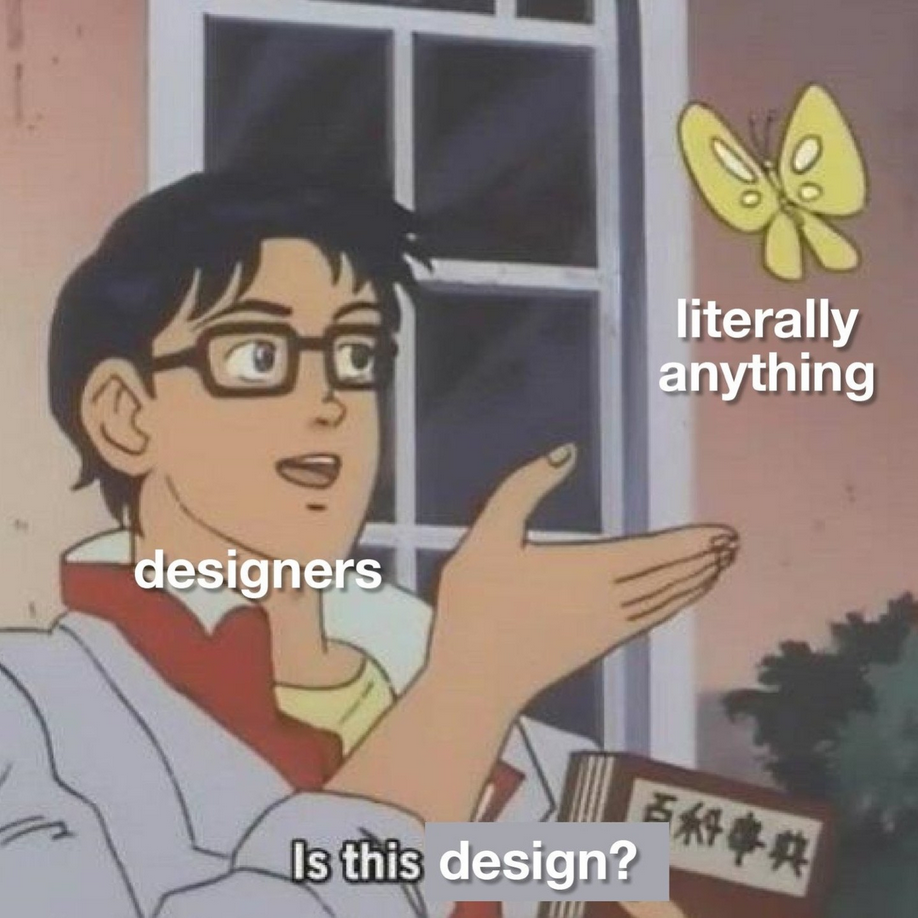
Ask a designer to define design and it becomes philosophical, poetic, grandiose, all-encompassing. It becomes a container for hopes and dreams, an expression of one’s identity, a sales pitch, an academic rabbit hole, maybe even redirection for deep insecurities. But as such, it’s often nebulous, hyperbolic, subjective, sometimes confusing. It leaves little room to talk or strategize about collectively.
One way to define design is to zoom out from insular design-centric discourse and look at its place in the economy and how it got there. The positioning of design does not happen between designers, it happens between designers and people who work (or choose not to work) with them and even more specifically, who pays them and what they pay them for.
The role of designers emerged distinct from artists or craftspeople or DIYers. They weren’t local creative people just doin’ their thing, artisans working in indigenous or vernacular styles, or people who primarily do other things and have to make visual decisions now and then. Design comes from a professionalization and specialization of those impulses brought on by the separation of aesthetics or planning from production. Any designer who has bristled at being called a graphic artist, cringed at a contractor hacking together a clumsy build, or has advocated for professional certification will tell you that design is on another level. People don’t invest 6-figures to study a hobby or to do a cool poster every few years. They are training for a stable career and looking for a return on their investment.
Designers are hired by people to create plans for another set of workers or specialized machinery which execute the plans for a larger audience or scale. So the client or employer requires not just enough to pay for design, but for a whole team of people or production equipment. The professionalization of large-scale design has roots in work for wealthy institutions or patrons like church architecture or court fashion. Sustainability was for the poor. In Caps Lock, Ruben Pater situates the roots of graphic design in creating complex, high-quality, standardized but difficult to duplicate, official-looking documents for royalty or heads of state, often to facilitate trade and financial transactions. For access to this work, designers had to be some combination of educated, upper class, well-connected and male. But design really came into its own with printing and the factories of the 1800s where products and communications were prepared for large scale production. The rise of design is built on the atomization of the production process and can involve deskilling and the loss of autonomy for other workers. While a craftsperson or artisan may create both the form and material object that is a vase, a designer makes specs to hand off to a whole team at a factory who actually produce the item. It may infact be a scribble by a charismatic entrepreneurial director that goes through a team of other designers before even going to production. The most visible and exciting parts (along with the profits and credit) being broken off and given to the one with the most power, the logistics and hundreds of decisions big and small to bring it to fruition given to nameless people below.
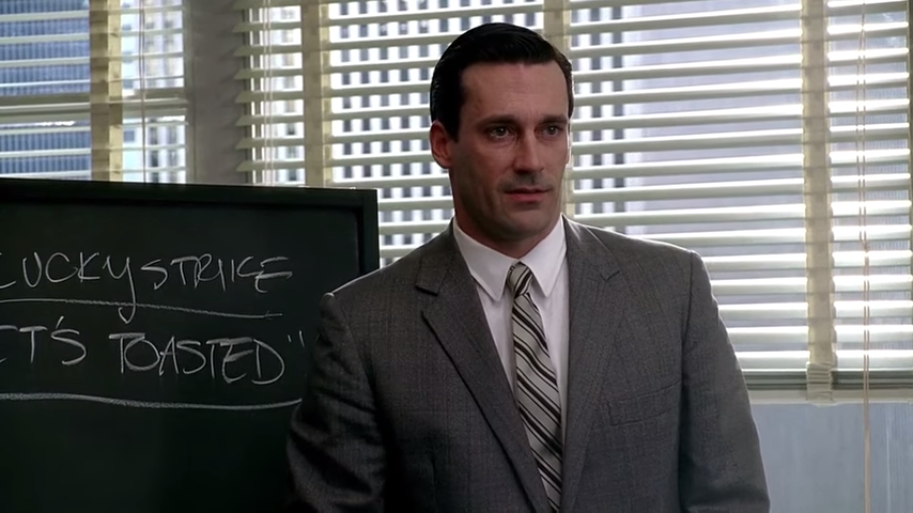
Within the last century, designers enabled the rise of unsustainable consumerism through practices like planned obsolescence, fast fashion, and by servicing advertising, packaging, and PR industries. Starting in the 1990s, we moved into user experience to aid mass adoption of new technologies. We reduced “friction” by easing security and increasing surveillance. We obfuscated access, control, and anything businesses didn’t want people to think about. We made machine learning sound futuristic and magical instead of acknowledging its dependence on stolen, biased or garbage data and un(der)paid human labor. Nielsen Norman Group, an authority on user experience, defines its field in strictly consumerist terms: “The first requirement for an exemplary user experience is to meet the exact needs of the customer, without fuss or bother.”
Sure, well-designed innovations did a lot of great things, but these get plenty of attention in the design world. This flipside is often hidden from us, at great expense to others, but increasingly ourselves.
I am talking about big “D” Design – Design stars, Designer as hero, Designs that “change the world”. Design may fit within a hierarchy, but there are also hierarchies within design. And sometimes actual artisans or indigenous makers are called designers through self-identification or to elevate them in professionalized culture. So – it’s complicated. The very word “design” can get loaded and political.
Design as a modern profession was borne of the industrial revolution and remains consistently linked to capitalism. But as creative people, designers are also inextricably tied to culture. Consequently, our role is often to bridge the desires of our patrons, employers or clients to the desires, emotions and cultural language of the people to whom they want to sell their products or ideas via a practice of honed craft.
designers work for who pays them
Ideals and aspirations of design’s power aside, the people designers consistently serve are those most willing to pay them. Entrepreneurs and business owners focus on clients willing and able to hire them or investors able to fund them. You can start to see how this eventually works out. Individuals, companies and organizations with the most resources pay the most, provide infrastructure with the most support, teams with the most capacity, projects with the biggest budgets and roll outs to the biggest audiences. The concentration of power makes for more cohesive, consistent and all-encompassing experiences – the finest of corporate gesamtkustwerken. Proprietary closed systems and monopolies allow us to play god within a tightly-controlled ecosystem and offer a ton of impact, exposure, and recognition. Who doesn’t want to work under those conditions? If you are focused on the forefront of craft, this is surely the way to go. And the more money you make, the more likely you can afford a life filled with good design. We may be powerful, or at least our work may be very visible, but only at the will of our patrons and the power we exert is in service to their goals.
Design may be “the rendering of intent” or “problem solving”, but it is ultimately the intent of those who pay and the kinds of problems we’ve adapted to solving are theirs. We only work for audiences and users of interest to our funders and to the degree their desires aren’t at odds. Research is usually for how to better meet the business goals of corporate leadership or how to increase conversions, not generative explorations for how to best address problems in a given space or serve the underserved. We all have our preferred clients and our moral limits and sometimes we exercise soft power to expand ideas of what’s possible, but under personal pressure as an individual, or to support growth as a proprietor – designers follow the money. In lean or transitional times, we follow it even more desperately and are more willing to compromise.
Design is not inherently valuable within current systems because it make the ineffable material or the complex elegant or because it delights & surprises or other any other high-minded self-definitions that have emerged over the past few decades. There are very specific purposes design serves.
- At a basic level, planning something before you make it can save you time and money compared to just winging it. And having someone manage your production who’s experienced with the specific type of thing you’re producing reduces risk.
- Designers and other creative people also serve as bridge between a business and their potential customers. Ruthless people used to looking at others as marks or numbers need someone who can resonate with fellow humans to help color in their business model – creating the product to move or the marketing that moves it.
- Designing interactions for automated services or designing for mass production enables scale while often eliminating or deskilling other workers.
- Designers also manipulate signifiers to make any one thing – notably harmful or useless or cheap, seem like another thing – notably good, desirable, moral, normal or inevitable. It distills a complex system down to a very limited number of clear, pre-determined, well-framed choices. It transforms what would other be clearly bad trajectories into desirable ones, reframing perceptions in its wake. Like a truffle hog, we’re sent in to root out the valuable nugget in a field of shit and direct all attention to that. Design hides the brutal conditions of resource extraction, labor exploitation and private enclosure behind objects of desire.
When used in these ways, good design is good business. In service jobs you are incentivized to identify with those you serve in order to move up. Without a critical framework or a strong moral foundation and desiring more pay, status, or autonomy; workers subconsciously espouse funders’ goals as smart, competitive, innovative or even common sense. It even affects your view of how the world works and who is best fit to run things. The suits doing whatever it is they do is how we get paid, and it’s best not to bite the hand that feeds you. More money and better conditions start to feel like a necessity in a competitive, individualist, scarcity-based society in the midst of economic uncertainty, massive debt and few social services. So we internalize and execute on the wishes of the wealthy and powerful for our own advancement or survival. This starts a drift towards behavior we eventually and clearly can identify as “bad”.
the rise of “design for good”
Perhaps sensing moral peril in high stakes/high rewards spaces like fintech or defense, some practitioners might gravitate towards more neutral sectors like education or culture. Or some turn to government, academia and nonprofits. However, it’s hard to get away from an entire system built on maximizing and concentrating capital. In these other spaces, power is exercised through lobbyists and campaign funders, or is dependent on wealthy philanthropists. And there always seems to be room for private sector monetization.
The roots of charity trace back to Gilded Age tycoons looking to deflect public attention from their worst sins (cf. Norman Rockefeller, Andrew Carnegie, Leland Stanford, J.P. Getty). You see it today with the Sacklers. The sector’s very existence is often dependent on the negative externalities of capitalism. If not for exploitation or tax dodging, no one would be able to accrue that much surplus to give away. This also allows them to define the focus and limits of social good, ensuring it’s not put towards anything that challenges them or works a little too well (note how the success of UBI programs are leading not to adoption but bans). So the root is still there, just obscured and filtered, with money being rerouted in convoluted ways until it slows to a trickle as it nears the people doing the work.

As for government and public entities, their budgets are constantly being eaten away to fund tax breaks for wealthy individuals and corporations. What’s left is micromanaged or politicized resulting in extremely hierarchical, bureaucratic, risk-adverse cultures, hostile to creative or collaborative work. What funding there is often gets diverted to private contractors and consultants taking advantage of nebulous success metrics and procurers unfamiliar with industry standards. They scrape insights and data while spreading private-sector values that weaken these structures from the inside. The actual quality of work among these contractors is often very low and cookie-cutter as their main expertise is navigating byzantine procurement or application processes. Wherever and whenever there is money to be made, even in ethical public-service spaces, a profit-seeking business interest with an army of salespeople has already beaten you there.
Design looks so different in these spaces that it’s rarely called such. As mentioned, it’s often a secondary part of another job like a program director, communications manager, webmaster, analyst or researcher. Or if it is specialized and highly positioned, it may offer lower pay while also being highly competitive to get into, requiring extensive unpaid prestige positions or first ascending the ranks in the corporate world, internalizing it’s sensibilities, growing and drawing upon those networks of vendors and consultants. As David Graeber says in Bullshit Jobs, “A truck driver’s daughter from Nebraska might not have very much chance of becoming a millionaire—America now has the lowest social mobility in the developed world—but it could happen. There’s virtually no way that same daughter will ever become an international human rights lawyer, or drama critic for the New York Times. Even if she could get into the right schools, there would certainly be no possible way for her to then go on to live in New York or San Francisco for the requisite years of unpaid internships.”
The often extremely rigid, elitist nature of these spaces paired with a very visible embrace of the signifiers of being “good” and the generally inaccessibility and competition make for a different kind of toxic culture – steeped in hypocrisy and delusion that can feel even worse than the private sector. Driven by ego instead of money, it can be a worse kind of authoritarian hierarchy with fewer options for those not already on top.
Smaller grassroots endeavors that truly prioritize serving people often do not have the luxury to prioritize design and can be extremely unwelcoming, albeit in a different way. They may be skeptical of design based on the superficial or manipulative role it plays in the private sector. Or they may be glad to get the help but lack the basic infrastructure, processes or even language that designers are used to in order to get work done quickly and smoothly. They might not have the time, capacity or production resources to implement complicated custom designs, and start to see it all as an impractical nuisance and designers as high-maintenance. The business-speak designers adopt for survival in the corporate world falls very flat in these spaces and can erode trust. In general, the goals and sensibilities in these worlds are very different and much more education and translation is required all around.
But often there are no paid positions at all. Up until a decade or so ago, design for social good was assumed to be pro bono, volunteer, personal work or competitive contests. If you searched “nonprofit design” in the early 2000s you would only see advice on how to negotiate for total creative control in order to maximize value for what was assumed to be portfolio pieces. As Paula Scher states, these projects are a way for designers to exert power. “That’s why pro bono work is great. You choose to do it, and if you’re choosing to do it to grow your own work, your deal is essentially that you’re not going to collaborate. You’re going to do the job the way you think the job is gonna be done—and they’re gonna use it. That’s a power thing. That’s not a victim thing.” I can imagine the kind of reputation these designers give the field of design in these spaces. Also note that “good” work is dependent on having another sustainable source of “real” work.
This work still attracts ego-driven professionals looking to brand themselves as more socially conscious but also draws experienced burn-outs looking to work on anything with some meaning, classrooms indulging students in “social practice” that they infact have to pay to work on, and those without jobs hoping it might eventually lead to some paid work down the line. Practitioners have long fought against these conditions in the professional world. The fact that this is the standard in “design for good” might show how little design is valued in work not centered on consumerism and how ill-prepared or unsuited designers are for those milieus. That can be particularly painful to think about if you’re passionate about both design and good.
so what now?
Perhaps this definition sounds like a downer. Many contemporary professional fields have unsavory origins, redefined by PR and industry boosters. Or they’ve been twisted from their 20th century conceptions by neoliberal economics. Relevant to this condition is the Ehrenreichs’ idea of the Professional-Managerial Class (PMC) which refers to salaried mental workers who do not ultimately own or control the work being done but reproduce capitalist culture and class relations to “lower” workers they oversee or affect. Many who are in these roles are completely unaware of this dynamic and thus unable to have a conscious relationship with it. The term PMC is notably absent from the education of those it refers to. Your image of your job may be very different not only from people outside it, but from people above and below it – who may infact understand it in ways you don’t.
But the point of explorations like this is to grapple with reality. Or in tech parlance, to “fail faster” and not waste time going down the wrong path, helping the wrong people, investing in something that has no intention or capacity to change things for the better but further immobilize you. It’s also to avoid being a useful idiot, susceptible to feels instead of outcomes or strategy. I’ve seen decades pass as I would get more confused and disillusioned, distracted by ego-friendly wishful thinking while conditions keep getting worse.
It can be freeing to better understand how things work. Just as designers experiment with and push the boundary of form, we can explore working towards different political, philosophical or social ideas and new organizational structures. The real downer part is when you’re lost and alone, buried in a field that’s a lot more traditional and a lot less powerful or creative than its members choose to acknowledge, feeling like a failure. Much needed critique get drowned out, solidarity becomes increasingly difficult, foreclosed on by ambitious or insecure peers simultaneously adopting the messages and language of those in power while exploiting hollowed-out counter-culture forms for a sense of authenticity.
space for change
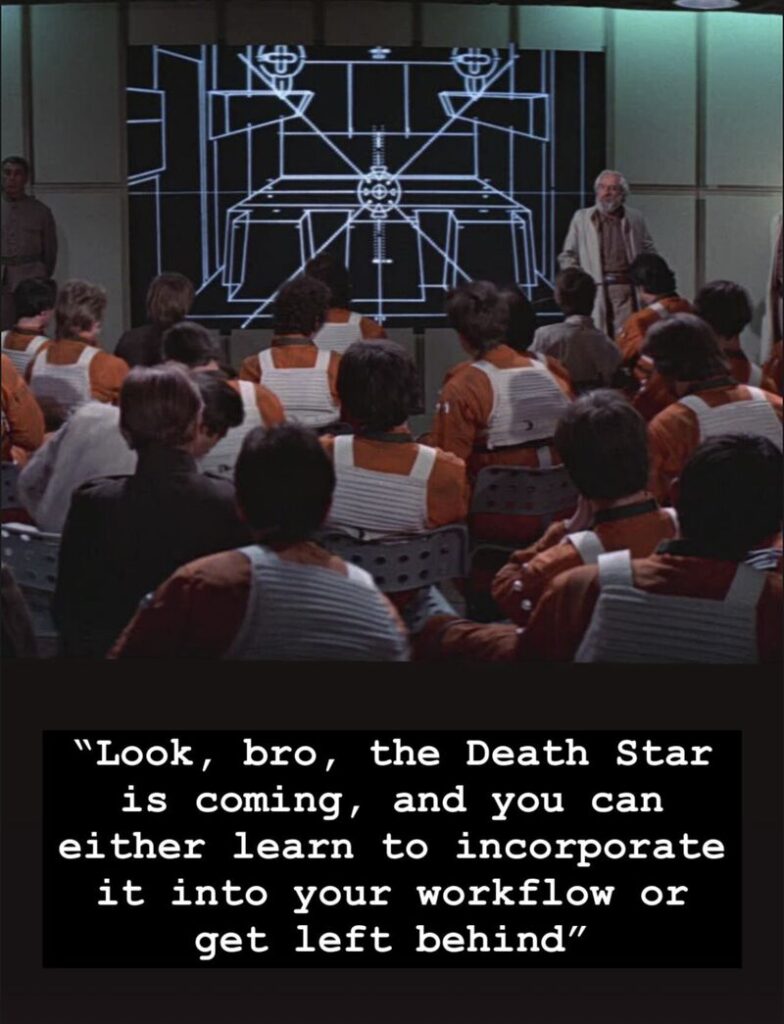
Change is needed for design to survive in any form worth saving. More specifically, it’s needed in design culture, organizational structures, and through participation in larger political movements. None of these have to do with form. But interventions in these areas can make the collective space for each of us to pursue whatever forms or practices we are moved by.
Design culture as expressed in media, professional institutions and academic programs is very friendly to the status quo. Even edgy programs seem impressed by alums who land a job at a global tech or consumer lifestyle corporation. This was not always the case. In the 70s, 80s and even 90s there was a lot more actual slack, room for social criticism, subculture, art, theory, and generally more individuality and experimentation. You could have a pretty good life on a lot less income. Economic conditions may have been uniquely good in the US in the mid/late 20th century, but the way we’re all caught up and perpetuating our descent seems uniquely bad. Normalizing or even promoting existential threats like generative AI and turning a blind eye to mounting barriers to getting hired or sustaining a practice as if individual designers must be at fault is unhelpful and unhealthy. Design culture could be a source of support or information but it has seemingly little concern for its future, more resembling a limp rag shaped by the billionaire leaders of an increasingly sadistic market.
In terms of organizational structure, most workplaces are very hierarchical and anti-democratic. This is likely exacerbated as opportunities are concentrated in global corporations instead of diversified among companies of different sizes and character with more room for independent practice. We’re all more inclined towards authoritarianism when we get socialized in it every day at work and in media. We need flatter, collaborative, or even co-operative or unionized workplaces. Work structure and conditions have a huge effect on your mental health* not to mention the quality and scope of your work and thus warrant a lot more attention.
And lastly, we need deep political and social change. If there was more regulation of those corporations and big tech companies we fawn over, more taxation, lower cost or free education, more social services and programs like UBI, and more support for organizations outside of the private sector, many downstream problems would shift. Design is good for business only in a diverse and competitive marketplace. Once monopoly, corruption, consolidation or enshittification set in, design becomes expendable. Changing these socio-economic factors would lead to changing who’s able to pay us for work and reducing the amount of pay needed to live. This is what would actually create the space and funding to pursue post-capitalist practice and all their accompanying forms and characteristics. Right now, unfunded critical design work is on top of or even more challenging than the usual grind. Not sure if this needs to be said, but there is no capital for anti-capitalist design.
*using the term “mental health” with the realization that its meaning has shifted and is often used to individualize and externalize societal problems
redefining design
I believe there are new roles for all kinds of designers given the complexity and scale and even all the “stuff” we have now and these roles could break from design’s legacy of only serving the elites in power. It could be facilitating a new standard of social services, collaborating on public cultural programs, communications for democratic workplaces, creative durable goods for longevity and sustainability, optimizing for collectivism instead of isolation, or even something akin to “fully automated luxury communism” as seen in Mark Fisher’s ideas about Designer Communism and Georges Monbiot on Public Luxury. Speed, service, scalability, care, and delight can all be used to distribute core services to massive amounts of people. We can and should serve other interests, including those of creative workers like ourselves.
Perhaps designers as humans with similar drives, interests, mindsets and skills can better understand the structures we work under and shift. What if designers just identified as workers, no better or worse than other jobs? Could we even see equality between us – between the big idea guy and the production artist? Could we collaborate on equal footing? Many scramble for more power and money to get out from under someone else because domination seems inevitable. But what if people could do the role they want to do and still get their needs met, whether it be a graphic designer, creative director, researcher, teacher or even craftsperson or artist just doing their thing? What if we didn’t have to be on top or on bottom but could just be? Not a slave to the market, or trends, or “the future”, or AI, or whatever art schools are selling this year. Not everyone has to be into a single vision or definition of design – and they should still be able to eat. Feeling superior or elite shouldn’t be inherent in design identity. Though it can stem from constant trivialization and condescension from those who do things that “matter” (also borne of insecurity). There is plenty of room for plurality in design and people making quirky new stuff or elegant stuff or clever, meaningful stuff, or fun useless stuff.
Even if a designer prefers business as usual and (perhaps rightly) roll their eyes at “design for good” initiatives, it would valuable for more designers to have a clearer understanding of economics, power, history and labor. That foundation could allow for better discussions and more realistic perspectives on sustainable or ethical practices and production. The best public intellectuals that could help designers frame their work are not already famous elite designers or consultancies, caught-up and using old art school words ham-handedly, but critical researchers, political historians, or philosophers – and a much more diverse set of working designers. Critical ideas that go against the grain or outsider perspectives can be hard to access let alone understand and apply so there is also legitimate work needed to translate and amplify it for design contexts. Whether readying for massive change or gradually growing our individual awareness, it would be great to have direction towards something better.
We’re like a lot of workers. Freelancers, business owners, and entrepreneurs are equally tied to how markets and capital are moving. The sooner we recognize that, the sooner we can fight together for all of us to work in dignity. Imagine if we all could feel more secure and have more breathing room in a culture that is mutually supportive instead of endlessly competing, upskilling, and monetizing. Our obsession with purpose and craft and total confidence in the inherent value of our work can be a powerful driver, but also a weakness that clouds our vision and enables exploitation of self and others. There are better paths, but we can’t walk them alone.
Leave a Reply